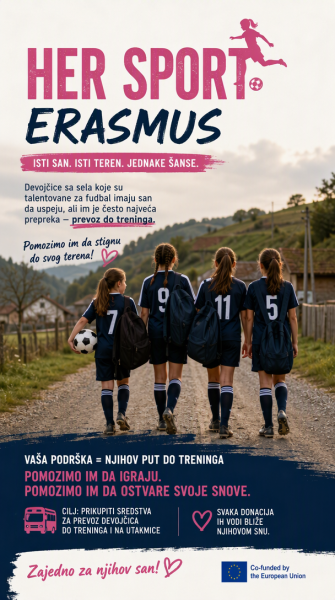
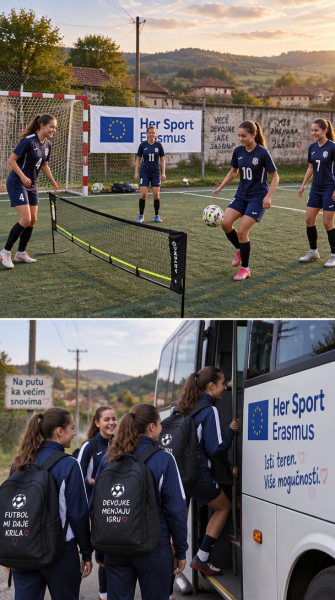
Girls aged 13–17 living in villages (in the areas surrounding Niš, Aleksinac, Lazarevac, and Vrčin) that lack public transportation—and for whom the “HER SPORT” project covered their parents’ fuel costs—stated that their primary motivation for training is a deep love for sport. They noted that training is crucial to their happiness and that sport provides them with the encouragement to believe they can achieve anything they desire in life.
1. WHY DO THEY PARTICIPATE IN SPORT? (Primary Motivation)
When asked what initially drew them to sport and kept them involved, the 211 girls surveyed provided the following reasons:
• 48% – A love for the game, competition, and a sense of achievement.
• 32% – A sense of belonging to a team and social connection (sport serves as a “second family”).
• 15% – An escape from the boredom and isolation often found in rural environments.
• 5% – Health-related reasons or recommendations from doctors or schools.
HOW IMPORTANT IS IT FOR THEM TO BE ABLE TO TRAIN (with fuel support), given that they previously thought their sporting careers were over?
This was the most emotional part of the survey. Before the project’s intervention, 78% of the girls had seriously considered quitting sport—solely because they had no way to get to training sessions.
• 94% responded that this support was “Crucial” or “Very important” for the continuation of their sporting careers. • 85% stated that they felt “immense relief, happiness, and gratitude” because they no longer have to choose between their education, household responsibilities, and sports.
• A key quote from the survey: “I thought I would have to quit because my dad couldn’t afford to spend money on gas every single day, and there are no buses. When the project solved this for us, my zest for life returned—not just my passion for sports.” (Marija, 16 years old)
WHY IS SPORT IMPORTANT TO THEM? (Perception of personal benefits)
The girls identified deeper psychological and social benefits, beyond just the physical ones:
• 42% – Sport builds their self-confidence and the belief that they can achieve anything in life.
• 33% – Sport serves as a coping mechanism for managing stress (from school, puberty, or family pressures).
• 25% – Sport provides them with a goal, discipline, and a structured daily routine filled with activities that bring them joy and happiness; this keeps them away from harmful habits (none of the girls smoke cigarettes, and only 2% have tried alcohol).
HOW IMPORTANT IS SPORT IN THEIR LIVES? (Rating of importance
on a scale of 1 to 10 (where 10 is “absolutely essential”):
• Average rating: 9.3 / 10
• 88% of the girls believe that the skills learned through sports (perseverance, teamwork, respect) are more important for their future careers and lives than the actual sports results.
• 91% stated that they plan to continue participating in sports or remain active within the sports community into adulthood—specifically because, during their critical teenage years, they received the support they needed to keep going.
These statistics reveal a simple yet powerful truth: about twenty liters of gasoline can save a sports career—and, in doing so, help shape the character of a future woman.
When there is no bus, logistics become the enemy of talent.
Through the ‘HER SPORT’ project, we did more than just pay for fuel; we relieved the children of guilt, eased the financial burden on their parents, and sent a clear message to these girls: “Your dream is worth every kilometer.”
Investing in transportation for talented young female athletes—from their villages to their training locations in the city—is not an expense. It is a highly valuable investment in the mental health, equality, and future of our children